
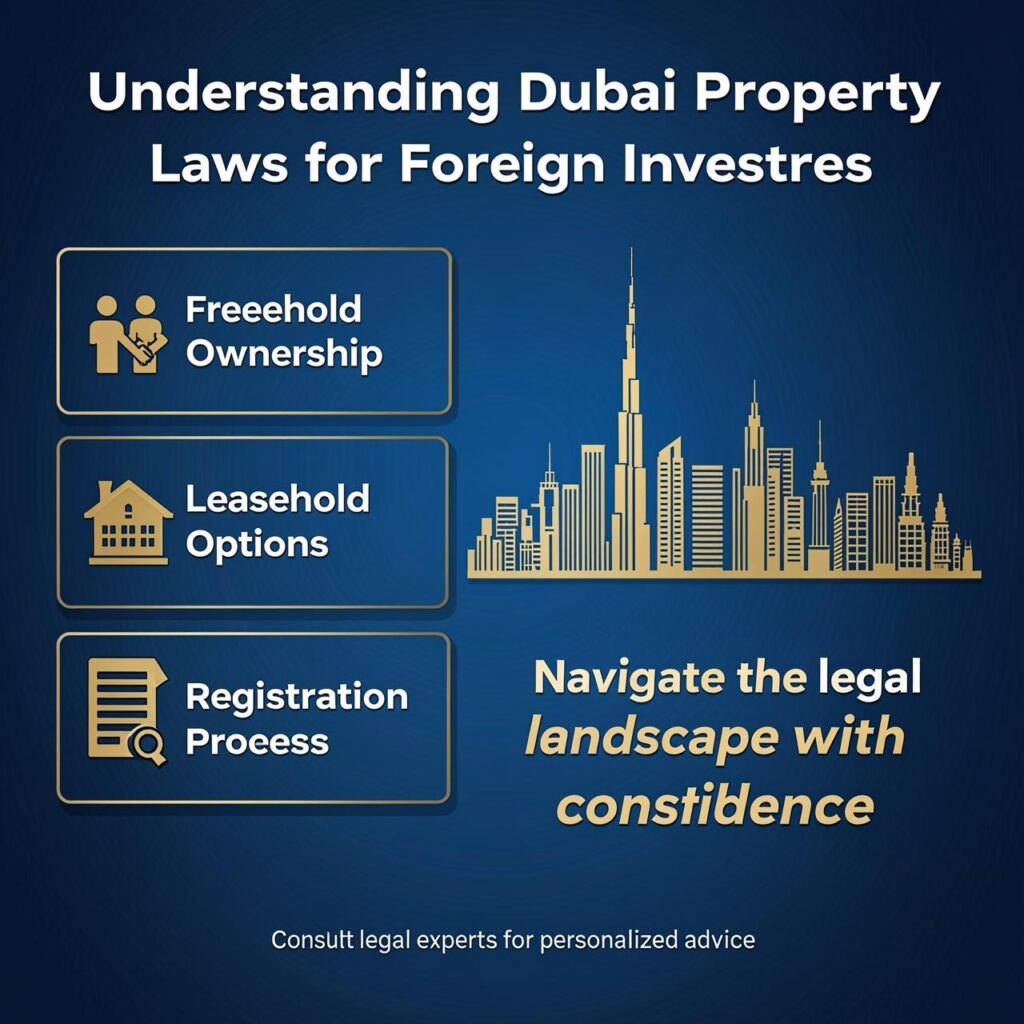
Dubai has established itself as one of the most foreign-investor-friendly real estate markets in the world. The emirate’s progressive property laws have opened doors for international buyers, making it possible for non-residents to own property with full freehold rights. This comprehensive guide explains the legal framework that every foreign investor should understand.
Freehold vs Leasehold: Understanding the Difference
Freehold ownership grants the buyer complete ownership of both the property and the land it sits on. This is the most common and preferred form of ownership for foreign investors in designated freehold areas. Dubai has designated numerous freehold zones where foreign nationals can purchase property with full ownership rights.
Leasehold ownership grants the buyer rights to use the property for a specified period, typically 99 years. While less common for residential purchases, leasehold arrangements still exist in certain areas.
Designated Freehold Areas
The Dubai government has designated specific areas where foreign nationals can purchase freehold property. These include:
- Downtown Dubai
- Dubai Marina
- Palm Jumeirah
- Business Bay
- Jumeirah Village Circle (JVC)
- Dubai Hills Estate
- MBR City
- Dubai South
- Palm Jebel Ali
The Purchase Process for Foreign Investors
1. Property Selection: Work with a reputable real estate agent registered with RERA to find suitable properties.
2. Sale and Purchase Agreement: Once you’ve selected a property, you’ll sign an SPA that outlines all terms and conditions.
3. Memorandum of Understanding: For secondary market properties, an MOU is typically signed and a deposit (usually 10%) is paid.
4. NOC from Developer: For ready properties, the developer must provide a No Objection Certificate.
5. Transfer at Dubai Land Department: Both parties meet at the DLD to complete the transfer.
6. Title Deed Registration: Upon completion, you’ll receive your title deed as official proof of ownership.
Required Documentation
Foreign investors typically need to provide:
- Valid passport copy
- Entry visa or visit visa copy
- Proof of address in home country
- Bank details for payments
Escrow Account Protection
One of the most important protections for property buyers in Dubai is the mandatory escrow account system. Developers are required to deposit buyer funds into RERA-regulated escrow accounts, ensuring that money is used solely for construction purposes.
Tax Considerations
Dubai currently has no property tax, no capital gains tax, and no income tax on rental income. However, foreign investors should consult with tax professionals in their home country to understand any reporting requirements.
Dubai’s property laws provide a secure and transparent framework for foreign investment. By understanding these laws and working with qualified professionals, international investors can confidently navigate the Dubai real estate market.